Replies
drafted.
Sales mapped.
A UK car parts seller was answering every eBay message by hand and had no quick way to see what was selling, where, and what was coming back. We built a private helpdesk on their own server that drafts replies in the store's own style and turns their eBay orders into sales views they can act on.
Every answer typed by hand. Every sales question answered by guesswork.
The store sells grilles, emblems and other vehicle-specific parts. Whether a part fits depends on the exact car, so buyers ask before and after they order. We analysed three and a half months of the store's message history before designing anything.
On the sales side, finding the best seller, the most refunded listing or the areas that order most meant exporting reports and working it out by hand. eBay also only serves the last 90 days of orders.
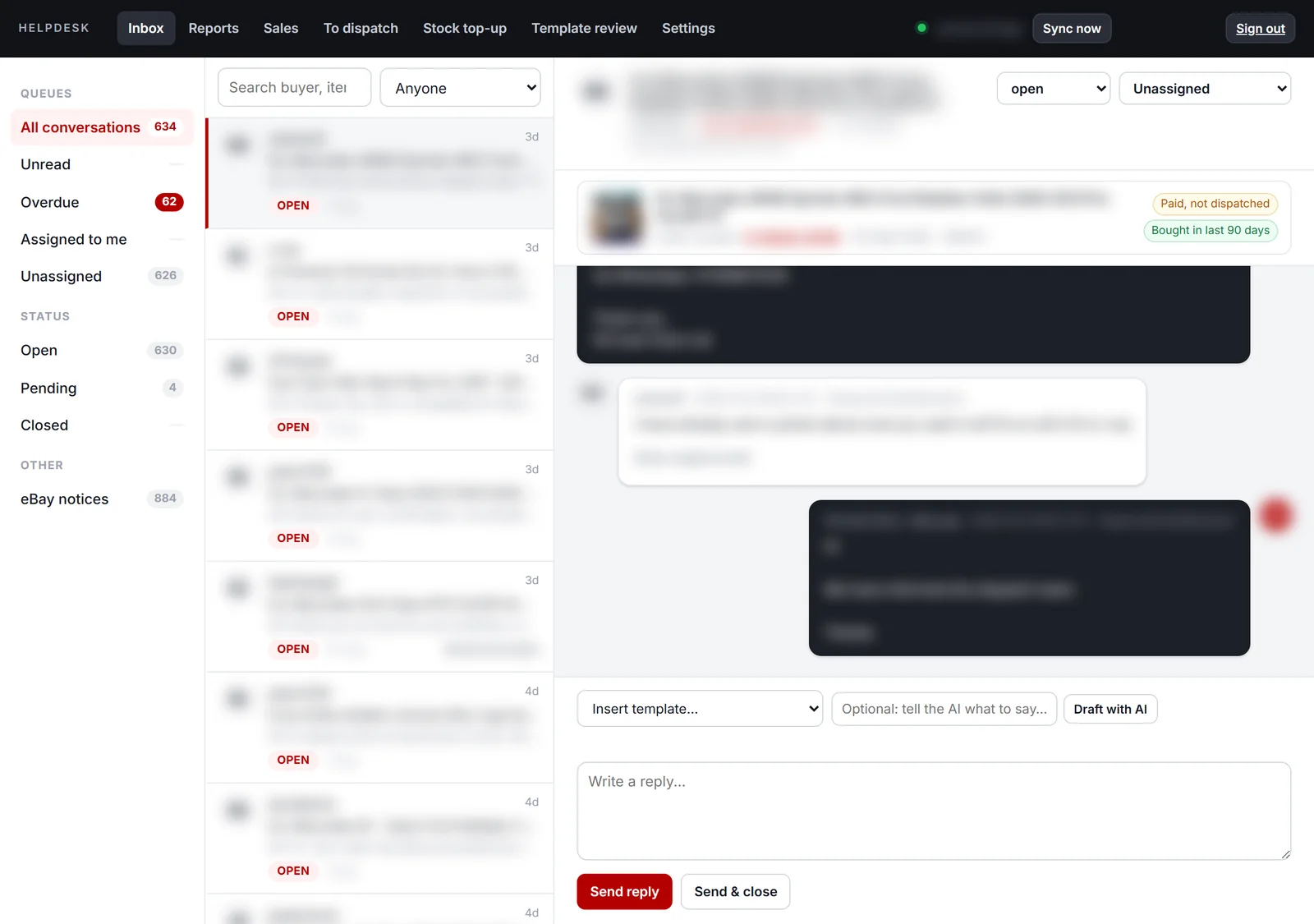
A draft that already knows the listing, the photos and how the store writes.
Each buyer message gets a draft built from the live listing data, the buyer's photos, the store's templates and a set of store facts. The house style was learned from 1,224 of the seller's real replies and follows the owner's own layout.
A person reads, edits and sends. Fitment answers state facts that have to be checked, so they stay with a human by design. Every outgoing message is also checked against eBay's rules on contact details before it leaves.
thank you for the photo.
yes, this grille fits your model.
we will dispatch it today.
thanks
Their own orders, turned into decisions.
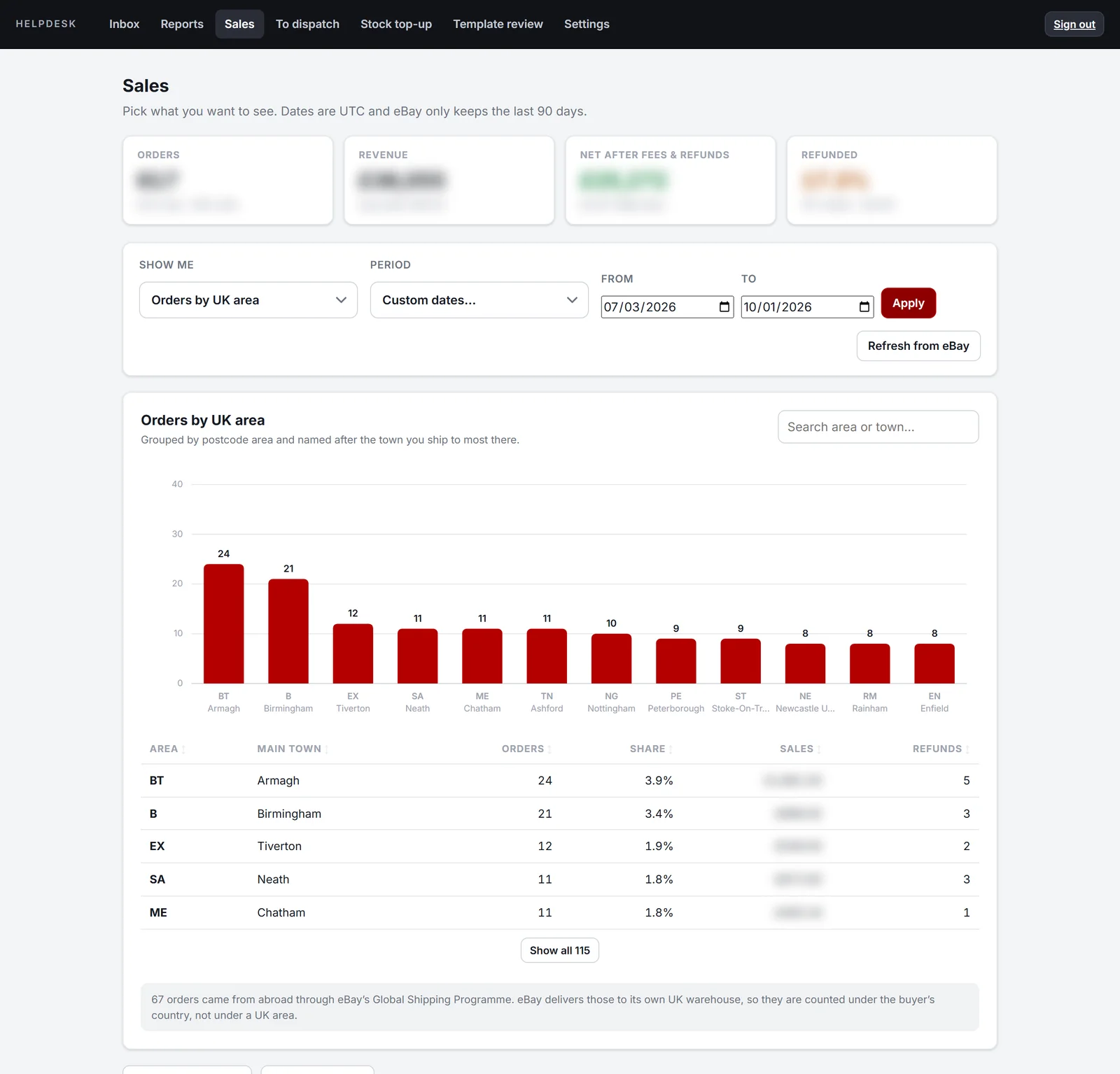
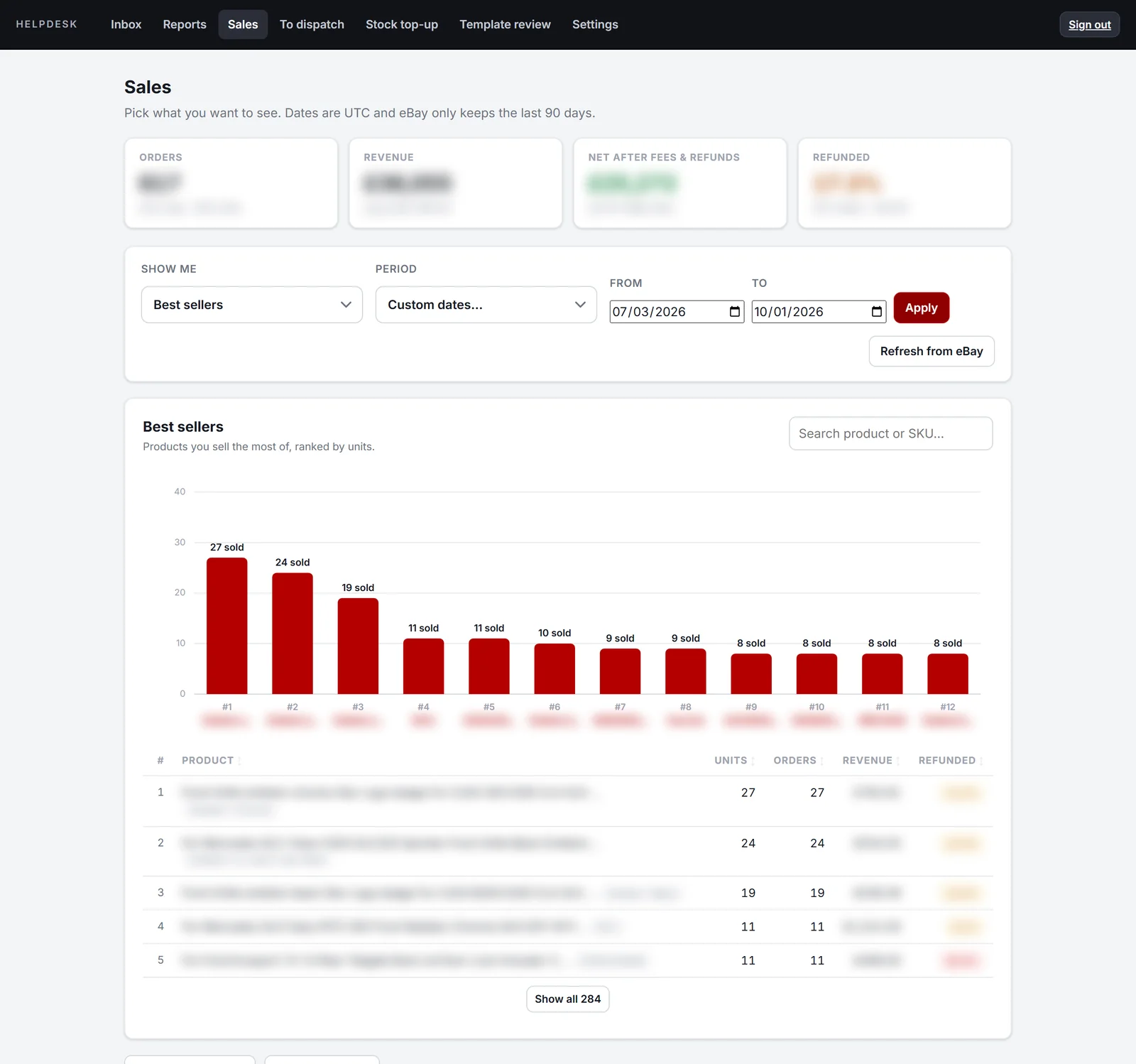
The helpdesk reads every eBay order and shows six views. Each one is sortable, searchable and exports to CSV. eBay stops serving orders after 90 days; the helpdesk keeps every order from the day it was connected, so the history gets more useful every month.
Best sellers
Which listings bring in the most orders and revenue. What to keep in stock, and what is worth promoting.
Orders by UK area
Where the buyers actually are. Aim Google and Meta ads at the areas that already buy, and see the areas that do not.
Most refunded
The listings that cost money after the sale. Usually the listing or the fitment details need fixing.
Most cancelled
Where orders fall through before dispatch.
Sales over time
Daily and weekly movement, so a promotion or a price change can be judged against a baseline.
Repeat buyers
Who comes back, and for what.
One screen instead of four.
- Inbox. Every eBay conversation with the buyer's order, tracking and status beside it, plus notes, assignee and search.
- Photo requests triggered by the order. When a part needs a vehicle photo, the request is queued automatically with the right wording for that part type.
- To dispatch. Paid orders sorted by dispatch-by date, late and due-today flags, tracking upload straight to eBay.
- Stock top-up. All 1,550 listings checked about every 30 minutes. Staff write a plain note per listing and the AI turns it into a rule. It runs in preview first so the owner sees every decision before it is switched on.
- Roles. Staff see the inbox. Sales data and AI settings stay with the owner.
From 19 API calls a pass to 2.
A week after launch, replies started failing by mid-afternoon. eBay gives an application 5,000 Trading API calls a day in total, and the first version of our sync was using about 9,100. We rewrote it to fetch only what changed since the last pass, with a full pass every six hours. A usage counter is now on screen so the allowance is never a surprise.
The client owns all of it.
Want something like this?
We build helpdesks, order tools and automations around the marketplaces and systems a business already uses, hosted on infrastructure the business controls. Tell us what your team repeats every day.